 Optencis
Guide
Binary options explained: the complete, honest guide
Binary options are often sold as the easiest way to make money from the markets. They are the simplest way to trade, yes. Easy, no. This guide explains how they really work, the one calculation most guides leave out, what they do well, where they hurt, and how to start without burning your account in the first week.
1. What is a binary option?
A binary option asks you one question: will the price of an asset be higher or lower than it is now, at a precise moment in the future? You answer with one of two decisions, up or down. That is where the word “binary” comes from.
It is also the definition used by the US Securities and Exchange Commission (SEC) on its investor education site: at expiry, the holder receives either a fixed amount or nothing.
The result is just as simple. Either you are right and you receive a fixed payout, or you are wrong and you lose the amount you invested. Whether the price moves by a fraction of a cent or by a hundred points does not change what you win or lose.
An example. You invest $10 in EUR/USD going up within the next 5 minutes, with a payout of 90%.
| Outcome | What happens | Result |
|---|---|---|
| EUR/USD is higher after 5 minutes | You get your $10 back plus $9 | +$9 |
| EUR/USD is lower after 5 minutes | You lose the $10 invested | −$10 |
Notice the asymmetry: you win $9 but you lose $10. Keep that in mind, it is the heart of section 3.
2. How a trade works
Every binary trade comes down to five choices:
- The asset. A currency pair (EUR/USD, GBP/JPY), a commodity (gold, oil), a stock index, a share or a cryptocurrency.
- The amount. What you invest in the trade. It is also the maximum you can lose on it.
- The direction. Up or down. Many platforms show it as “Higher / Lower” or “Call / Put”.
- The expiry. When the trade closes: from a few seconds to several hours. The price at that moment decides the result.
- The payout. The percentage of the amount invested that you earn if you are right. It changes with the asset, the time of day and market conditions.
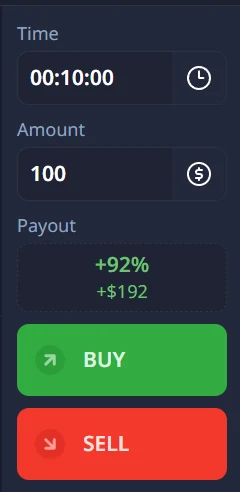
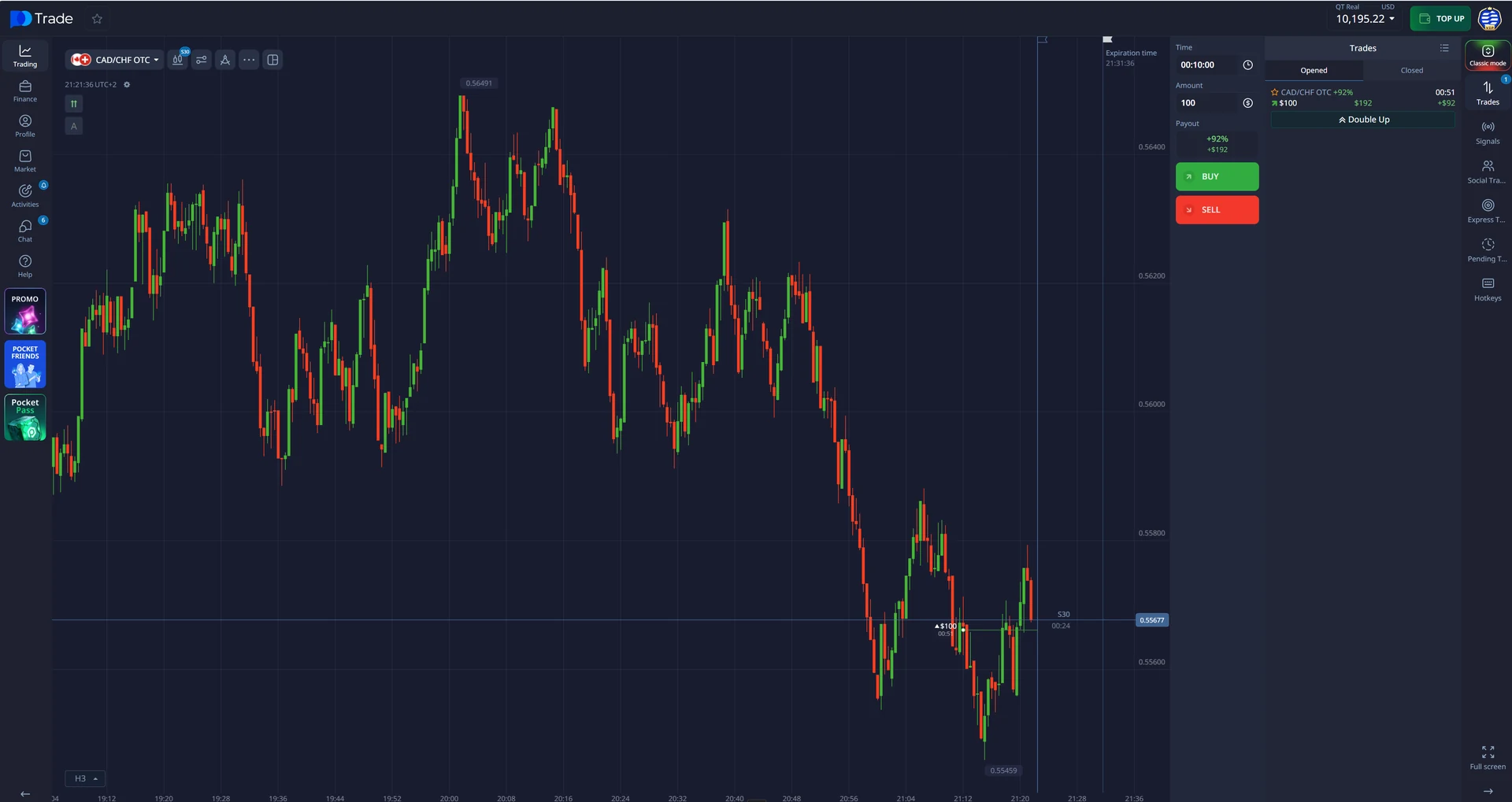
Once you confirm the trade, it runs until expiry: the platform marks your entry price on the chart and counts down the time remaining.
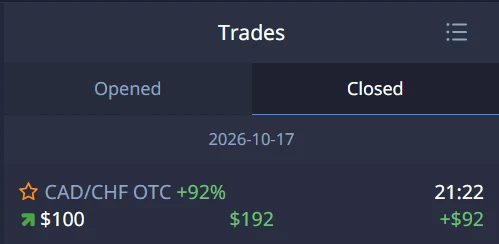
At expiry, the trade closes and moves to your history with its result. In this example, the price ended higher: the $100 invested returned $192, a profit of $92.
Real market or OTC? Most platforms offer two kinds of assets.
- Market assets follow prices from the real financial markets. They are only available when those markets are open.
- OTC assets (“over the counter”) are priced by the broker itself, especially at weekends when the markets are closed. They can be traded at any time, but their price does not come from the real market, and their behaviour can differ from it. Know which one you are trading.
3. The math nobody explains
Here is the calculation that changes how you see binary options.
Since a winning trade pays less than a losing trade costs, you need to win more than half of your trades just to stay level. The break-even win rate is:
Break-even = 1 ÷ (1 + payout)
| Payout | Win rate needed to break even |
|---|---|
| 70% | 58.8% |
| 75% | 57.1% |
| 80% | 55.6% |
| 85% | 54.1% |
| 88% | 53.2% |
| 90% | 52.6% |
| 92% | 52.1% |
What happens if you trade at random? Taking positions at random is right about 50% of the time. Over 100 trades of $1 at a 90% payout, that is 50 wins of $0.90 and 50 losses of $1: −$5. At an 80% payout, it is −$10. Random trading does not lose fast. It loses slowly and surely.
Two lessons follow:
- The payout matters. The difference between 80% and 90% is three points of win rate. Always check it before you trade.
- Everything happens in a few points. Between 50% (random) and 52.6% (break-even at 90%), there are only 2.6 points. Your whole job as a binary trader is to work above that line, consistently. That gap is your edge.
4. Why we chose binary options
We started like most retail traders: four of us, $5,000 pooled together, and the forex market.
It did not take us long to see how trading is usually sold: as a way to make money. The reality is less flattering. Retail trading mostly exists to bring non-professionals’ money to the markets, where it ends up working for those with far larger funds, better data and faster tools.
We learned it the hard way. We once spent days going through long financial reports, the kind of work 99% of non-professionals never do, and found that a company’s accounts did not add up. We traded it on the downside. We were right. And yet, with our capital, the gain was tiny compared with the time we had put in. With a small account, even the best decision barely moves the needle.
In 2017, on trading forums, we came across binary options. Two decisions: up or down. A fixed payout, whatever the size of the account.
The turning point came when we calculated the break-even rate. After a long time working hard for almost nothing, that number gave us a clear target. We realised that the discipline we had brought to classic trading could pay off far better here, and that it did not take hours of research: for us, a few well-chosen indicators and a clear reading of the trend were enough to work above that line.
Today, Optencis is a team of four, specialised in binary options: short trades, longer trades, and the analysis of the traders who perform best over time, not over a single good trade.
Our goal is simple: bring to binary trading the same rigour as institutional trading, and share that expertise with those who are ready to start and willing to put in the work.
5. The advantages
- Simplicity. Two decisions, a fixed payout, a fixed expiry. You can understand a trade in seconds, which leaves your attention for what matters: the market.
- Risk known in advance. Before you click, you know exactly what you can earn and what you can lose. No stop-loss slipping, no margin call.
- Small amounts. You can trade with a few dollars per position. A fixed payout means a small account is not penalised by small price moves, as it would be in classic trading where 1% of $200 is $2.
- A clear result on a short horizon. You know within minutes or hours whether you were right, which makes it fast to learn and to measure your progress, if you keep a record.
- Many assets, often at any time. Currencies, gold, indices, shares and crypto from one account.
6. The disadvantages and the risks
We would not be honest if this section were shorter than the previous one.
- The math is against you by default. As section 3 shows, you need more than 50% of winning trades just to break even. Most beginners never reach it, especially those who see binary options as the loophole that will make them rich, and so never take the time to learn.
- Speed is a trap. Trades that close in seconds make it easy to take dozens of decisions an hour, most of them without a real reason. Very short expiries are close to noise.
- Emotions cost more than in slow trading. Trying to win a loss back with a bigger trade, or doubling the amount after each loss (the martingale), can empty an account in minutes. Starting from $1, seven doublings in a row put $127 at risk to earn $1.
- OTC is not the market. OTC prices are set by the broker. Indicators read the market’s past and give signals from it. On an OTC asset, that past is the broker’s price history, not the real market’s, so readings designed for the real market may not behave the same way.
- High risk overall. As in classic trading, you can lose all the money you deposit. Only trade with money you can afford to lose. For an independent view, read the warning on speculative products published by the European Securities and Markets Authority (ESMA).
7. Our 3 golden rules
- Simple is not easy. Binary trading is simple, but never lower your guard. Respect it and it will respect you. Get careless and it will correct you.
- You are always one good decision away. At a 90% payout, the break-even win rate is 52.6%. Trading at random gets you about 50%, and slowly loses money. Everything comes down to those 2.6 points: that is your edge.
- Every trade counts, even at $1. The habits you build at $1 are the ones you will have at $100.
8. How to start
- Start on a demo account. Most platforms give you virtual money to practise with real prices. Use it until you have taken at least 100 trades and know your win rate. To see what a real platform offers, read our full Pocket Option review.
- Write everything down. For each trade: asset, direction, expiry, payout, your reason and the result. Without a record, you cannot know whether you beat the break-even rate or simply had a good run.
- Keep trade amounts small and fixed. A common rule is 1 to 2% of your capital per trade, and a maximum loss per day after which you stop.
- Prefer real-market assets and clear moments. Learn on assets that follow the real market, at hours when that market is active, before you look at anything else.
- Follow the news calendar. Big releases (inflation, jobs, central bank decisions) move markets in seconds. Our economic calendar and central bank meetings pages show what is coming, and Optencis Wire turns the strongest news into clear trade ideas for members.
- Go live only when your record says so. And then start with the smallest amounts.
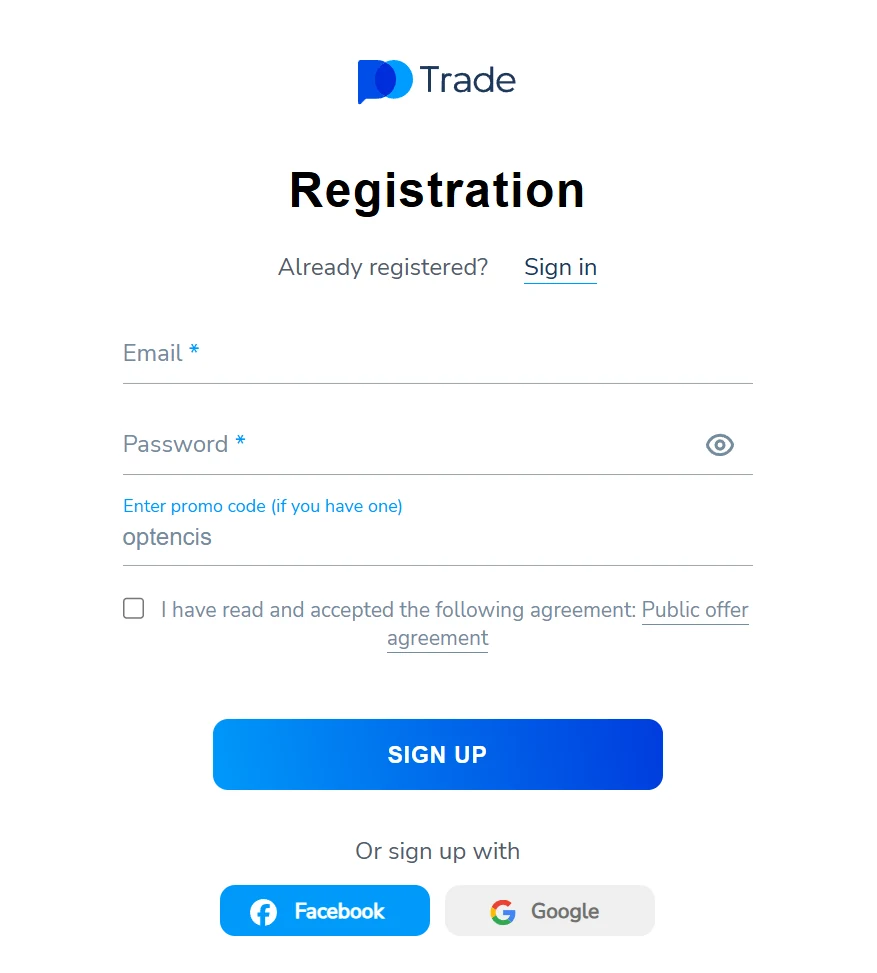
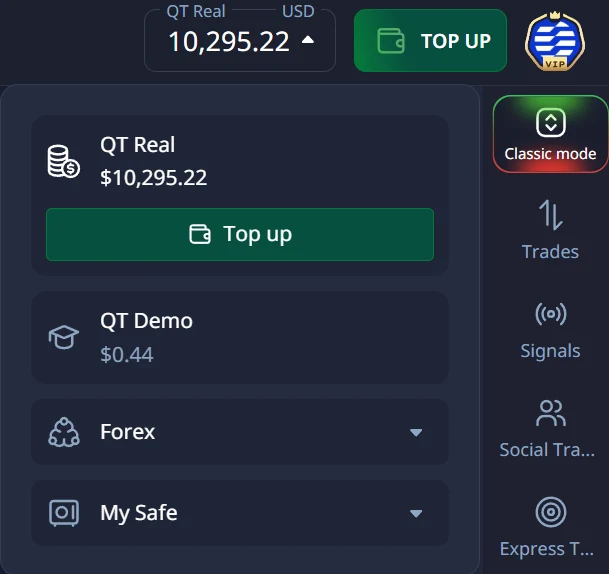
Opening an account takes a few minutes, and the demo account comes with it: you switch between real and demo from the account menu.
9. Go further with Optencis Edge
This guide gives you the foundations. Optencis Edge is our full course to build on them:
- Chapter 1 · Foundations: a trade from A to Z, the math in depth, choosing your asset and expiry.
- Chapter 2 · Reading the market: news and the economic calendar, market sessions, charts, a few useful indicators and their limits.
- Chapter 3 · Managing your money: trade size, daily limits, why the martingale ruins accounts, your trading journal.
- Chapter 4 · Mindset: discipline, the urge to win a loss back, overconfidence, and the scams to avoid.
- Chapter 5 · Taking action: the platform step by step, and a 30-day plan from demo to your first live trades.
- Chapter 6 · Ways to earn with binary: trading on your own, copying the best traders, trading the news, short signals, tournaments and automated trading, with the risks of each.
Access is free. All you need is an account with our partner broker, opened through our link. No deposit is required. The first lesson is open to everyone.
Transparency: Optencis may receive a commission from the broker when you open an account and trade through our link. It does not change what you pay, and it never changes what we write about risk.
10. Frequently asked questions
How much can I lose on a binary option?
The amount invested in the trade, and nothing more. Across many trades, you can lose all the money you deposit.
Can I trade binary options with a small amount?
Yes. Trades often start at $1. Small amounts are also the best way to learn, as long as you treat each trade seriously.
Is there a strategy that always wins?
No. Anyone who promises a guaranteed win rate or “sure” signals is selling something: the SEC and the CFTC, two US regulators, list the warning signs in a joint investor alert. The realistic goal is to work consistently above the break-even rate.
What is a good payout?
The higher, the better for you: every point of payout lowers the win rate you need. Check it before every trade, since it changes with the asset and the time.
What does OTC mean?
“Over the counter”: assets priced by the broker rather than by the real market, mostly available when the markets are closed. They behave differently from the real market.
How long should a trade last?
There is no single answer. Very short expiries are close to random noise. Longer ones, from several minutes to a few hours, leave more room for an analysis or a news event to play out.
What is the martingale, and why avoid it?
Doubling the amount after each loss to recover everything at once. One long losing streak, and they always come, wipes out the account. We explain it with numbers in Optencis Edge.
Do I need to deposit money to access Optencis Edge?
No. An account opened through our link is enough.
Binary options are high-risk products and you can lose all the money you invest. This guide is for education and information only. It is not investment advice. Past results never guarantee future results.
Start here
The essentials to read first
 Pocket Option demo account: free practice with $50,000 in virtual moneyHow the free Pocket Option demo account works, what it teaches and what it cannot, and how to use it so that…
 Break-even win rate in binary options: formula, table and calculatorThe win rate you need just to break even in binary options, for every payout: the formula, a full table, a calculator,…
 Money management in binary options: the rules that keep you tradingHow much to risk per trade, when to stop for the day, why losing streaks are normal and how to survive them:…
Binary options articles
November 2026

Trading the news in binary options: before, during or after the release?
Economic releases move prices more in a few minutes than in hours of normal trading. How to read the surprise, when to trade, which…
October 2026

SYP/USD OTC on Pocket Option: what this pair is and what really moves it
SYP/USD OTC is Pocket Option’s quotation of the Syrian pound against the US dollar. What the pair is, how the Syrian pound is managed,…

TND/USD OTC on Pocket Option: what this pair is and what really moves it
TND/USD OTC is Pocket Option’s quotation of the Tunisian dinar against the US dollar. What the pair is, how the Tunisian dinar is managed,…
YER/USD OTC on Pocket Option: what this pair is and what really moves it
YER/USD OTC is Pocket Option’s quotation of the Yemeni rial against the US dollar. What the pair is, how the Yemeni rial is managed,…
ZAR/USD OTC on Pocket Option: what this pair is and what really moves it
ZAR/USD OTC is Pocket Option’s quotation of the South African rand against the US dollar. What the pair is, how the South African rand…

IRR/USD OTC on Pocket Option: what this pair is and what really moves it
IRR/USD OTC is Pocket Option’s quotation of the Iranian rial against the US dollar. What the pair is, how the Iranian rial is managed,…
KES/USD OTC on Pocket Option: what this pair is and what really moves it
KES/USD OTC is Pocket Option’s quotation of the Kenyan shilling against the US dollar. What the pair is, how the Kenyan shilling is managed,…
LBP/USD OTC on Pocket Option: what this pair is and what really moves it
LBP/USD OTC is Pocket Option’s quotation of the Lebanese pound against the US dollar. What the pair is, how the Lebanese pound is managed,…

MAD/USD OTC on Pocket Option: what this pair is and what really moves it
MAD/USD OTC is Pocket Option’s quotation of the Moroccan dirham against the US dollar. What the pair is, how the Moroccan dirham is managed,…

NGN/USD OTC on Pocket Option: what this pair is and what really moves it
NGN/USD OTC is Pocket Option’s quotation of the Nigerian naira against the US dollar. What the pair is, how the Nigerian naira is managed,…
JOD/CNY OTC on Pocket Option: what this pair is and what really moves it
JOD/CNY OTC exists only on Pocket Option. What the pair is, why it follows USD/CNY through the dollar peg of the Jordanian dinar, its…

OMR/CNY OTC on Pocket Option: what this pair is and what really moves it
OMR/CNY OTC exists only on Pocket Option. What the pair is, why it follows USD/CNY through the dollar peg of the Omani rial, its…

QAR/CNY OTC on Pocket Option: what this pair is and what really moves it
QAR/CNY OTC exists only on Pocket Option. What the pair is, why it follows USD/CNY through the dollar peg of the Qatari riyal, its…

SAR/CNY OTC on Pocket Option: what this pair is and what really moves it
SAR/CNY OTC exists only on Pocket Option. What the pair is, why it follows USD/CNY through the dollar peg of the Saudi riyal, its…
BHD/CNY OTC on Pocket Option: what this pair is and what really moves it
BHD/CNY OTC exists only on Pocket Option. What the pair is, why it follows USD/CNY through the dollar peg of the Bahraini dinar, its…
AED/CNY OTC on Pocket Option: what this pair is and what really moves it
AED/CNY OTC exists only on Pocket Option. What the pair is, why it follows USD/CNY through the dollar peg of the UAE dirham, its…
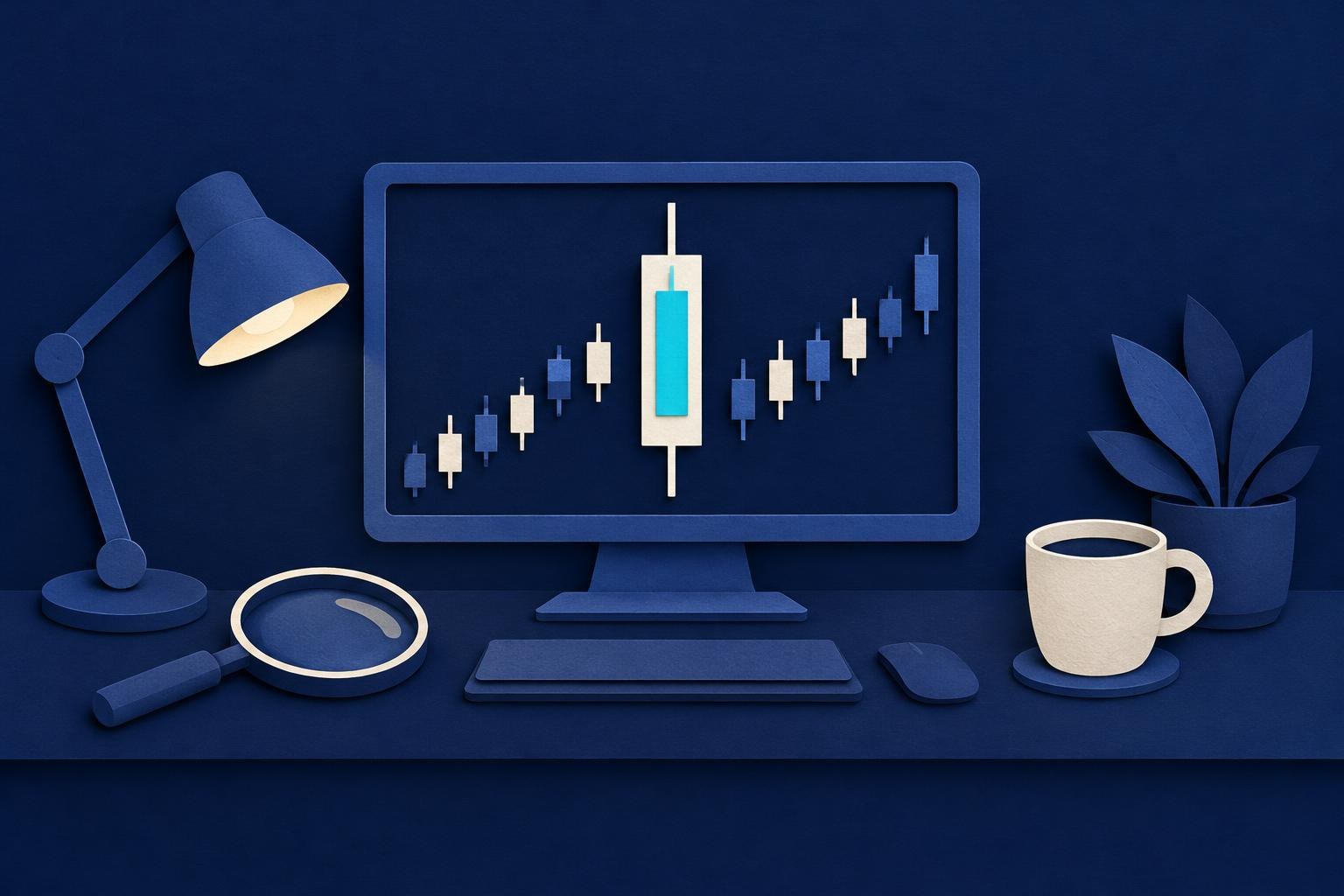
How to read a candlestick chart for binary options
What each candle shows (open, close, high, low), how to choose the timeframe, what long bodies, wicks and dojis tell you, and the mistakes…

Pocket Option Islamic account: what it changes and how to turn it on
Pocket Option has an Islamic account setting for traders who want to follow Islamic finance principles. What it changes, who can use it, how…
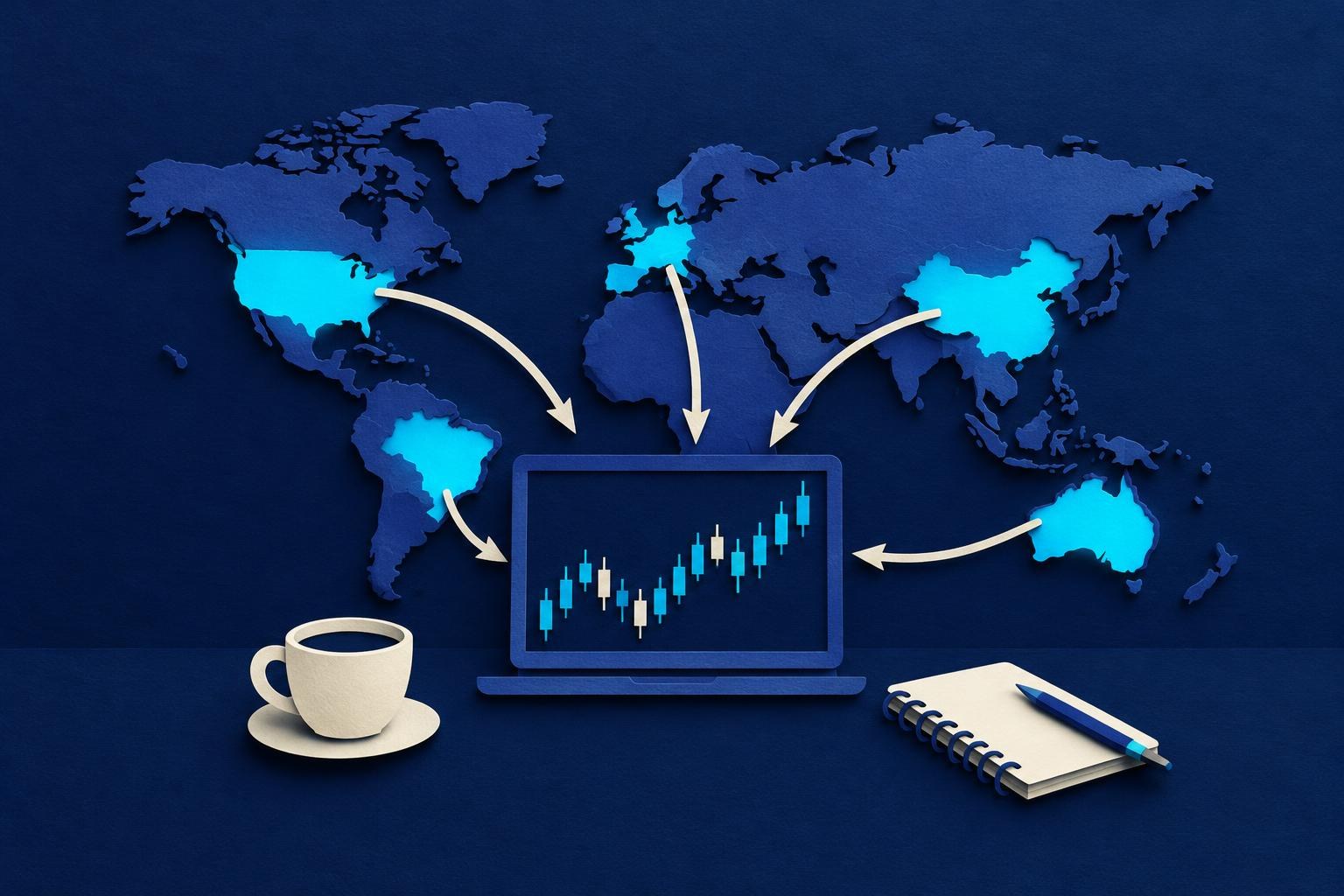
Pocket Option payment methods by country: what goes through, what gets declined, and the backup
Which deposit method works best at Pocket Option in Mexico, Argentina, Chile, Brazil, Nigeria and other countries, which ones are often declined, and what…
Which trade duration to choose in binary options?
From 30 seconds to a few hours: what each duration means for chance, analysis and the number of trades you take, and how to…
Money management in binary options: the rules that keep you trading
How much to risk per trade, when to stop for the day, why losing streaks are normal and how to survive them: the money…
Binary options vs CFDs vs forex: the differences that matter
Binary options, CFDs and forex all let you trade price moves, but they differ on what you can lose, what they cost, leverage and…
Pocket Option review: our full test of the platform
We tested Pocket Option on a real account and on the demo: registration, trading screen, assets and payouts, deposits and withdrawals, account levels, extra…

The martingale in binary options: how it works, its real risks and how to cap it (simulator)
Raising your amount after each loss ends most series in a small gain, but it does not change your average result. A simulator, the…