 Optencis

The duration of a binary option, or expiry, is the time between opening the trade and the moment the result is decided. Platforms offer anything from a few seconds to several hours. The right choice is not the fastest one: it is the duration that matches the reason you have to expect a move. The shorter the trade, the more chance decides the result.
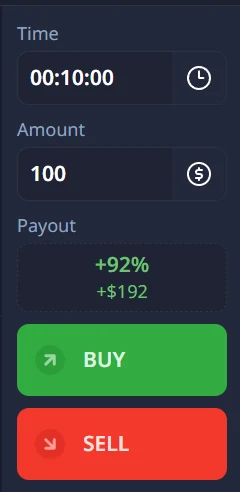
What changes with the duration
| Duration | What drives the price | Can your analysis make a difference? | Trades per session |
|---|---|---|---|
| Under 1 minute | Small random moves, the spread, single orders | Very little | Many, often too many |
| 1 to 5 minutes | Short-term momentum, the minutes around a release | A little, with a precise method | Many |
| 15 to 60 minutes | The trend of the session, supports and resistances | Yes | A few |
| 1 to 4 hours | News, central bank decisions, economic data | Yes, especially on news | One or two |
Why very short durations are a trap for beginners
- Chance dominates. Over a few seconds, prices move almost at random. Without a real edge, your win rate tends towards 50%, below your break-even win rate.
- You trade too much. Short trades invite dozens of decisions an hour, each one a new chance to lose.
- Emotions take over. A loss is followed by another trade within seconds, often to win it back. This is how accounts empty in an afternoon.
How to choose your duration
- Start from your method. If you read the trend on a 5-minute chart, an expiry of 3 to 5 candles (15 to 25 minutes) gives the move time to happen. If you trade news, 1 to 4 hours lets the market digest the figure.
- Check the time of day. In quiet hours, even a 15-minute trade can end where it started. See our market hours tool and the busiest sessions.
- Check the payout for each duration. It can differ from one duration to another: a lower payout raises your break-even.
- Keep one duration while you test. Measure your results over at least 100 trades with the same duration before changing it, in your trading journal.
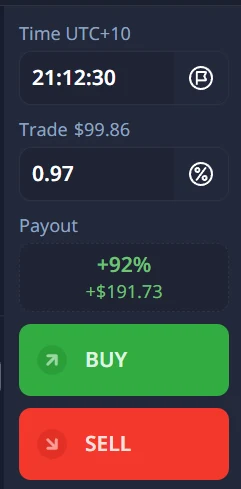
Our advice for beginners
Avoid durations under one minute while you learn. Start with expiries of 15 minutes to 1 hour on real-market assets, during the most active sessions, and give each trade a written reason. Our lesson on choosing your asset and expiry goes into detail.
Frequently asked questions
What is the best expiry time for binary options?
There is no best duration in general: the right one is the duration that matches your method and gives your reason time to play out. For beginners, 15 minutes to 1 hour is a sensible range.
Are 60-second trades profitable?
For most traders, no: over such a short time, price moves are largely random, and the payout below 100% makes the break-even higher than 50%.
Should I change duration after a loss?
No. Changing duration, amount or asset after a loss is a way of chasing it. Change your method only on the basis of your journal, over enough trades.
Binary options are high-risk products: you can lose all the money you invest. Read our binary options guide before trading.