 Optencis

Optencis is an affiliate of Pocket Option. Regulatory status and how we work
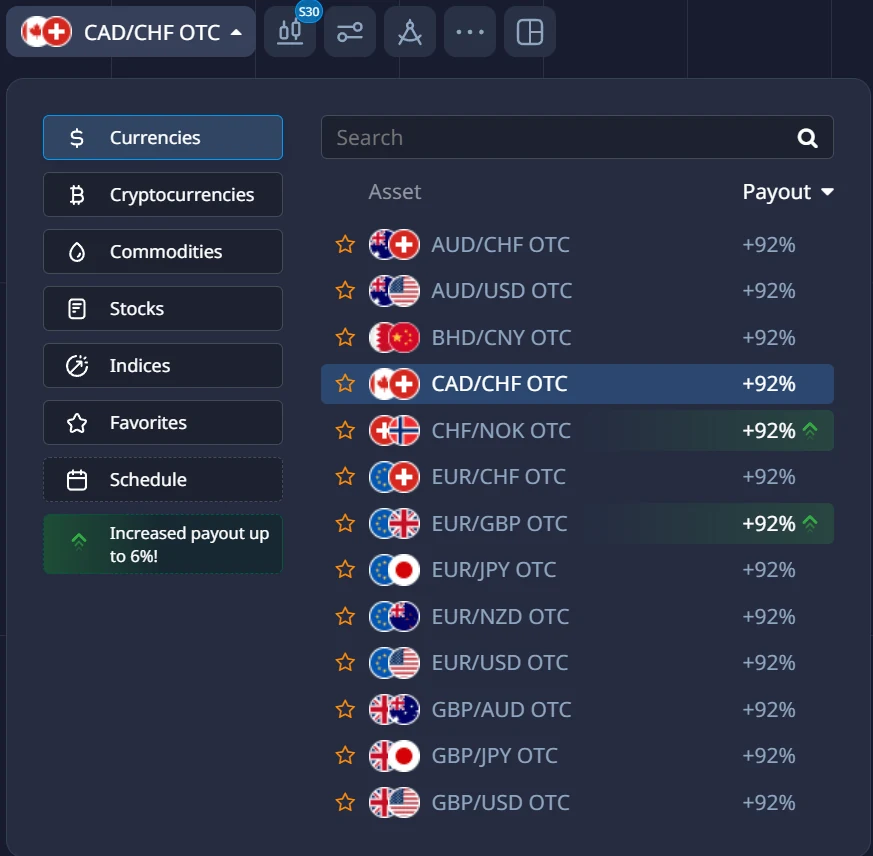
On Pocket Option, an asset marked OTC (“over the counter”) is not traded on a public market. Its price comes from the platform’s own price source, which is why OTC assets stay open at weekends and at night, when the real markets are closed. At weekends, the platform’s asset list shows dozens of OTC currency pairs, many with a payout of 92%. Here is what that label changes for your trading.
OTC or real market: the differences
| Real-market asset (for example EUR/USD) | OTC asset (for example EUR/USD OTC) | |
|---|---|---|
| Where the price comes from | The market, the same for everyone | The platform’s own price source |
| Can you check it elsewhere? | Yes, on any chart | No |
| Trading hours | Market hours (forex: Monday to Friday) | Also at weekends and at night |
| Does economic news move it? | Yes: rates, inflation, jobs… | Not in the way it moves the real market |
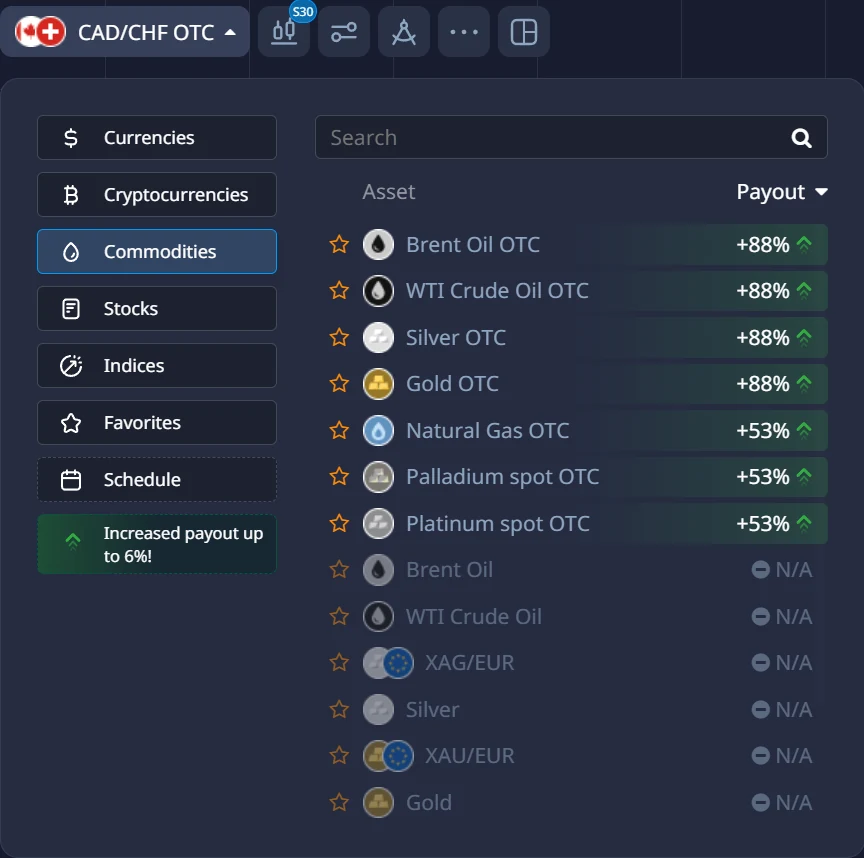
What changes for you
- News analysis does not apply. Reading the economic calendar, a central bank decision or a jobs report only makes sense on real-market assets. See our economic calendar and our lesson on news and the calendar.
- You cannot cross-check the price. On a real-market asset, you can compare the chart with another source; on OTC, the platform’s chart is the only one.
- The math does not change. At a 92% payout, you still need to win 52.1% of your trades to break even: what the payout really means.
OTC signals, bots and “patterns”
Searches for “OTC signals”, “OTC bots” and OTC chart tools for other software are very common. Be suspicious of anyone who sells them. Since OTC prices come from a single source that no one else can see, nobody can show you verified long-term results on them, and a seller with a method that really worked would have little reason to sell it. Our lesson on scams and false promises lists the warning signs.
Our advice
- Learn on real-market assets, Monday to Friday, during the sessions where your asset is most active: see market hours.
- If you trade OTC, apply the same rules: the same amount per trade, the same daily limits, a line in your journal for each trade.
- Track your OTC results separately from your real-market results, to see whether your method holds on both.
For an overview of the platform, read our full Pocket Option review.
Frequently asked questions
What does OTC mean on Pocket Option?
Over the counter: the asset is priced by the platform’s own source rather than by a public market.
Why is OTC available at weekends?
Because its price does not depend on a market being open. Real-market currency pairs close at the weekend.
Is OTC trading riskier?
The risk per trade is the same: you can lose the whole amount. What you lose is the ability to check prices and to use news, which leaves you fewer ways to build an edge.
Read our binary options guide and our Risk Disclosure.